Water Damage Assessment: The use of Thermal Cameras and Moisture Monitors in Water Detection
When water gets into a building, what you can see is often only part of the story. Carpets may feel damp, walls may look slightly stained, but water can be hiding in subfloors, wall cavities, insulation and behind joinery. If this hidden moisture is missed, you can end up with mould, odours and structural damage weeks or months after the apparent “clean-up”.
At Capital Restoration Cleaning, a thorough water damage assessment is always the first step. Our technicians use thermal cameras and moisture monitors to understand exactly where the water has travelled, how deeply it has penetrated, and what it has affected. This allows us to design a make-safe and restoration plan that’s fit for purpose.
Categories and Classes of Water – Why They Matter
Industry standards classify water damage in two key ways:
Category – what type of water is involved
- Category 1 (clean water): from clean sources such as internal pipes.
- Category 2 (grey water): from washing machines, dishwashers or some stormwater, containing contaminants.
- Category 3 (black water): highly contaminated water such as sewage or external floodwater.
Class – how far and how deeply water has spread
- Class 1: small areas and minimal absorption.
- Class 2: a larger area of carpet and underlay affected.
- Class 3: water has reached walls, insulation or ceiling spaces.
- Class 4: deeply absorbed into materials like brick, concrete or hardwood.
A correct assessment of water damage category and class helps us decide what can be safely restored, what must be removed, and how extensive the drying and decontamination needs to be.
What Does a Thermal Camera Do?
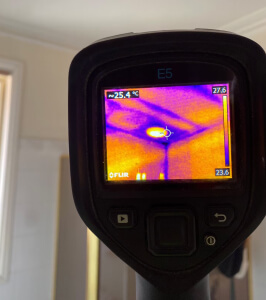
A thermal camera doesn’t “see water” directly – it measures temperature differences on surfaces. Wet materials often cool as water evaporates, creating temperature patterns that stand out.
Our technicians use thermal imaging to:
- Identify areas where moisture has travelled behind walls or under flooring
- Map the spread of water quickly across large areas
- Pinpoint likely problem zones that need further testing with moisture meters
For you as the property owner, this means we’re not guessing or relying only on what we can see and touch. We build a clear visual map of likely moisture-affected areas.
What Does a Moisture Monitor Do?
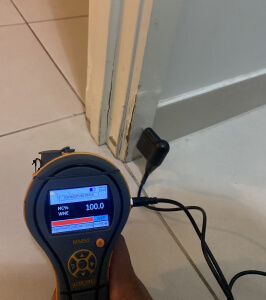
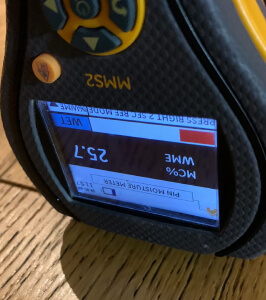
Moisture monitors (or moisture meters) measure the moisture content within materials such as plaster, timber and concrete. They can be non-invasive (placed on the surface) or have probes that go into the material.
We use moisture meters to:
- Confirm exactly which materials are wet and how wet they are
- Determine how far moisture has wicked up walls or into subfloors
- Establish baseline readings at the start of the job
- Track progress during drying until normal moisture levels are restored
Without moisture meters, it is easy to assume something is dry just because the surface feels normal. Dangerous levels of moisture can remain inside walls and floors.
Why Professional Assessment Tools Matter in Water Detection
Relying on sight and touch alone almost always underestimates the true extent of water damage. Without thermal cameras and moisture monitors:
- Hidden moisture pockets can be missed
- Mould can develop behind walls or under floors
- Drying may be stopped too early, leaving materials damp inside
- Future damage and health risks become more likely
At Capital Restoration Cleaning, our assessment process combines visual inspection, thermal imaging and moisture monitoring. This allows us to:
- Determine the category and class of water damage
- Be accurate with water detection by understand the real spread and penetration of moisture
- Develop a targeted make-safe and restoration plan
- Place drying equipment where it will be most effective based on water detection maps
- Provide clear documentation for owners, insurers and other stakeholders
If you’ve experienced a leak, burst pipe or flooding event, a proper assessment is the most important first step. Our team at Capital Restoration Cleaning uses professional tools and industry best practice to ensure no critical damage is overlooked and your property is restored safely and thoroughly.