What Areas Are Checked During a Mould Inspection Melbourne Service?
When mould becomes visible inside a property, many people assume the problem is limited to what they can see. In reality, visible mould growth is often only one part of a much larger issue.
A professional mould inspection Melbourne service is designed to determine the extent of the problem, identify potential moisture sources, and assess whether mould may be present in areas that are not immediately visible. This information helps property owners make informed decisions before any remediation works commence.
Why a Professional Inspection Is So Important
One of the most common mistakes property owners make is focusing solely on the mould they can see.
While mould may appear on a wall, ceiling, or other surface, the conditions that allowed it to develop can often extend beyond the obvious area. Without understanding the full extent of the issue, there is a risk that remediation works may address the symptoms without identifying the source.
A professional mould inspection Melbourne assessment helps establish the scope of the problem and provides a clearer understanding of what may be required to resolve it effectively.
Looking Beyond Visible Mould
Professional mould inspections involve much more than a visual check of affected surfaces.
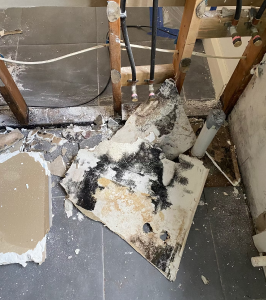
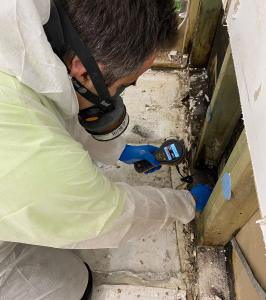
In many cases, mould can develop inside wall cavities, beneath flooring, within roof spaces, or in subfloor areas where moisture has accumulated over time. Properties with poor ventilation, previous water damage, leaking pipes, roof leaks, or ongoing dampness can be particularly susceptible to hidden mould growth.
For example, if a property has a persistent musty smell but little visible mould, the inspection may focus on identifying concealed moisture sources or areas where mould could be developing out of sight. Similarly, where water damage has previously occurred, further investigation may be required to determine whether mould has established itself behind walls or underneath building materials.
Using Technology to Investigate Further
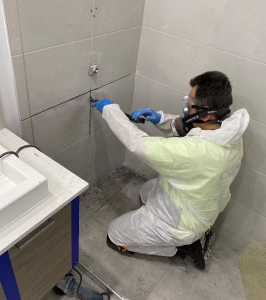
A key part of a professional inspection is using specialised equipment to assess conditions that cannot be identified through visual observation alone.
Moisture detection equipment can help identify elevated moisture levels within walls, ceilings, flooring, and other building materials. This information assists in locating areas that may be contributing to mould growth and helps build a clearer picture of the property’s overall condition.
Understanding where moisture is present is often just as important as identifying where mould is visible.
Airborne Spore and Surface Testing
In some circumstances, further testing may be recommended to provide additional information about the environment.
At an additional cost, Capital Restoration Cleaning can undertake surface swab sampling and airborne mould spore testing. Samples are collected and submitted to an independent laboratory for analysis, providing objective information about mould activity within the property.
This type of testing can be particularly useful where mould is suspected but not clearly visible, where there is an unexplained odour, or where property owners want a more detailed understanding of the conditions within the building.
Why Mould Removal Services Should Start with Inspection
Effective mould removal services begin with understanding the extent of the issue. A thorough inspection helps identify moisture sources, investigate hidden areas of concern, and determine whether laboratory testing may assist in the assessment process.
At Capital Restoration Cleaning, we believe that informed decisions lead to better outcomes. By combining visual inspection, moisture investigation, and optional laboratory testing, we help property owners gain a clearer understanding of the problem before remediation works begin.
Professional mould removal services are most effective when they are guided by a detailed and comprehensive inspection process.